I was successful and miserable. Let me tell you about that period — because it's the part of the entrepreneurship story that almost nobody tells, and it's the part that actually matters.
I had built something real. A consulting practice with enterprise clients. Revenue coming in. A reputation in the market. By every external measure, I was winning. And I remember sitting in my office one evening looking at the numbers thinking: is this it? Because if this is what success feels like, something is seriously wrong.
The goalposts had moved again. They always move. That's the trap nobody warns you about when you start a business.
The Achievement Trap Is Real, and It Will Find You
Here's what I've learned from building businesses, coaching entrepreneurs, and talking to hundreds of founders over the years: the hardest part of entrepreneurship isn't the market, the competition, or even the cash flow. It's the relationship between achievement and happiness — and almost every entrepreneur gets it backwards.
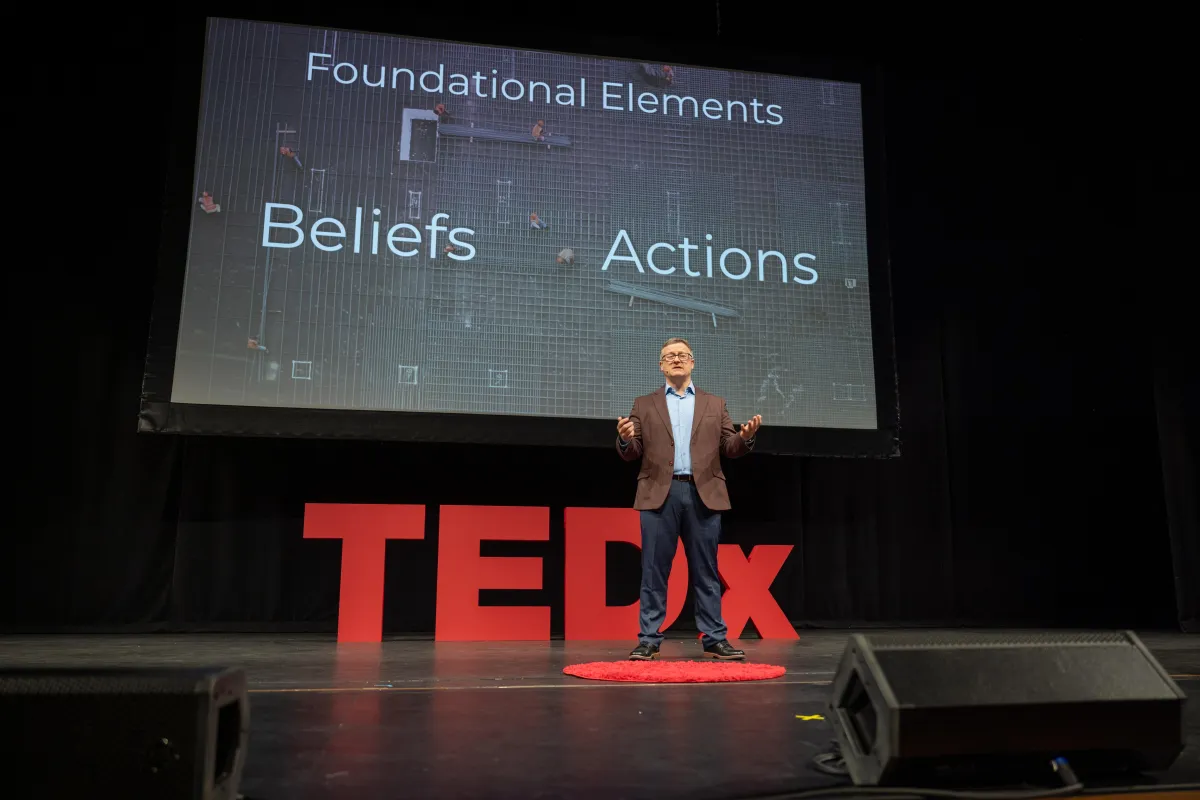
We build businesses with the belief that success will produce fulfillment. Hit the number, and then you'll feel it. Land the client, and then you'll feel it. Scale the team, and then you'll feel it. I spent years running that race and I can tell you from firsthand experience: the finish line keeps moving. Not because you're failing. Because that's how the achievement trap is designed.
Brian Tracy's research on the psychology of achievement identified six ingredients of a fulfilling life: peace of mind, health and energy, loving relationships, financial freedom, worthy goals, and personal fulfillment. Notice what's not on that list: a bigger revenue number. Notice what IS on that list: peace of mind first. Not last. First.
Happiness is not the reward for entrepreneurial success. Happiness is the fuel for it.
What Building from Zero Actually Teaches You
I built a cybersecurity and ERP practice at IBM from absolute zero. No clients, no inherited territory, no warm handoffs. Just a belief that I could create something where nothing existed — and the consistent daily action to prove that belief right.
That experience taught me the most important lesson I know about entrepreneurship: the self-fulfilling prophecy is your most powerful business asset or your most dangerous liability, depending entirely on which one you're running.
When I believed I could build it, my actions reflected that belief. My proposals were more confident. My client conversations went deeper. I asked for the business instead of hoping for it. And clients responded to that energy — not because they could read my mind, but because my belief changed my behavior, and my behavior changed their perception of me, and their perception changed how they engaged with me. The cycle ran forward.
I've also seen the reverse. Entrepreneurs who hit one setback and let it become evidence for a story about why they can't win. That story changes their behavior — they pull back, they hedge, they stop asking — and the market responds exactly the way the story predicted. The prophecy fulfills itself in the wrong direction.
The Three Things I'd Tell Every Entrepreneur Starting Out
1. Solve for happiness before you solve for revenue. I know how counterintuitive that sounds. Do it anyway. Ask yourself what you actually want your life to look like — not your business, your life — and make sure the business you're building is pointed in that direction. A business that produces revenue while eroding your health, relationships, and peace of mind is not a success. It's a well-decorated trap.
2. Audit the belief you're operating from. Not your business plan. Your belief. What do you actually believe about your capacity, your market, your ability to deliver? Because that belief is producing results right now, whether you're aware of it or not. If the results don't match what you want, start with the belief, not the strategy.
3. Build your accountability infrastructure before you need it. The Harvard Study of Adult Development ran for 85 years and found that the quality of your relationships is the single greatest predictor of a thriving life. This applies to business too. You cannot build something great alone. Find your people — coaches, peers, accountability partners — before you hit the hard stretch, because when you hit it, you won't have the bandwidth to find them.
The Question Worth Sitting With
If your business achieved exactly what you're working toward right now — the revenue, the clients, the scale — would you actually be happy? Not temporarily satisfied. Not relieved. Happy.
If the honest answer is "I'm not sure," that's not a small thing. That's the most important business problem you have. Everything else is execution. This is foundation.
I challenge you to write down your answer. Don't perform it for anyone. Just write the truth. What you find will tell you more about your business trajectory than any financial model you've ever built.
To your growth and prosperity.
— Mike Martin | Entrepreneur | Executive Coach | Author of The Self-Fulfilling Formula
If this landed for you, pick up a copy of The Self-Fulfilling Formula — it's the full framework for engineering the outcome you actually want, in business and in life.